
Beyond Cholesterol: Inflammation and Heart Health

Videos

Beyond Cholesterol: Inflammation and Heart Health Part 2
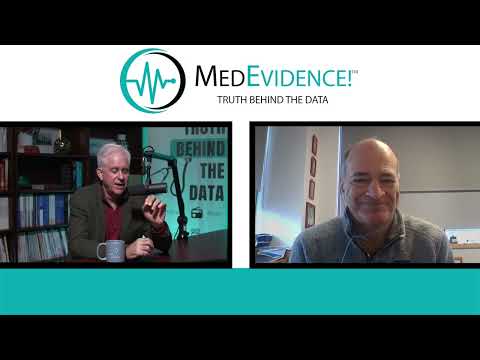
Beyond Cholesterol: Inflammation and Heart Health Trailer
Beyond Cholesterol: Inflammation and Heart Health Trailer
Audio
Dr. Michael Koren welcomes Dr. Paul Ridker, the leading expert in inflammation and cardiovascular disease, Professor of Medicine at Harvard University, and director of the Center for Cardiovascular Disease Prevention at Brigham and Women's Hospital. Dr. Ridker explains how his career began with challenging traditional medical assumptions, specifically the textbook risk factors for heart attack, and how this manifested in an intense interest in inflammation. The conversation continues into Dr. Ridker's work on groundbreaking research investigating how chronic inflammation drives diseases of aging, including heart attack, stroke, and cancer.
The doctors then highlight the pivotal discoveries in inflammation management, particularly the use of statin drugs. Dr. Ridker recounts how statins reduce heart attacks and strokes in individuals with high inflammation markers, regardless of cholesterol levels. These findings revolutionized cardiovascular treatment and emphasized the need to integrate inflammation control into preventive medicine.
|
|

Transcripts
Transcript Generated by AI.
Announcer: 0:00
Welcome to MedEvidence, where we help you navigate the truth behind medical research with unbiased, evidence-proven facts Hosted by cardiologist and top medical researcher, Dr. Michael Koren.
Dr. Michael Koren: 0:11
So, Paul, Ziltivikemab has a slightly different mechanism than Canukinumab. I think I said those reasonably well. Hard words to say, and so maybe you can explain to the audience what that difference is and why one pathway may be more hopeful than the other pathways.
Dr. Paul Ridker: 0:29
Sure. So, Mike, I'm going to take us to 30,000 feet first to begin this discussion, because we're getting a little sophisticated, but, I think, really helpful for our patients. When we talk about inflammation, we're not talking about a sprained ankle. We're not talking about drugs like Advil or ibuprofen or even aspirin. We're talking about the kind of inflammation that classically would lead to things like rheumatoid arthritis or inflammatory bowel disease or psoriasis, more severe disorders that go under the rubric of autoinflammatory or you know things like that.
Dr. Paul Ridker: 1:08
And there are certain specific pathways of this immune system that impact on some of these disorders more than others, and we're going to get very jargony very fast, but I think it actually makes sense. There's one particular pathway that all of us have; Understand, Everybody has this, because I said at the beginning, you need these things to survive childhood and get into early adulthood, but it kind of comes back to haunt us later in life. One of these pathways upregulates a certain cytokine. Now, a cytokine is a chemical molecule that tells cell A to talk to cell B. It's a communication system. That's all it is. It says hello out there, this cell is doing this. You better do that. I see something over there. That's not good. Let's go attack that.
Dr. Michael Koren: 1:55
Yeah, kind means to move. So cytokine means move cells. It's a chemical that moves cells in one direction or another, that's exactly right.
Dr. Paul Ridker: 2:03
It's just telling them move over here because there's something over there we got to deal with. It's an infection, it's a bug, it's a virus, whatever. One of these cytokines has a name interleukin-1. It's the first one that was ever discovered. It's at the top of the chain. The drug you mentioned before, canakinumab. Remember that MAB that blocks the function of interleukin-1. Actually, it's even more technical than that. It blocks the function of interleukin-1 beta. But let's skip over that and that turns out to lower the risk of heart attack and stroke without changing cholesterol. In fact, that's the proof of principle that this whole thing actually works came out of that canakinumab trial.
Dr. Paul Ridker: 2:51
Now the study with HERMES, as well as ZEUS study study and ARTEMIS study remember that's the chronic kidney disease study, the heart failure study and the acute coronary ischemia studies. They're all using this drug. Another MAB Ziltivekimab. It targets a downstream cytokine. It targets a downstream cytokine, so again, a cell-moving molecule called interleukin-6. Interleukin-6 is the central cytokine, it's the biggest player, it's the one that we think is most involved in this process and it's. What's really interesting is there are several drugs on the market that block IL-6 that already work for several of those more serious inflammatory diseases that patients actually know they have because they have symptoms. The question being asked, particularly in HERMES study, the heart failure study we're talking about is can we use this interleukin-6 blocker to improve the outcomes in heart failure patients where they don't feel their inflammation?
Dr. Paul Ridker: 3:48
Mike, I think that's probably the most important thing we're talking about today. This is silent inflammation. If a patient has rheumatoid arthritis, their hands and joints hurt. If they have lupus, their skin hurts, if they have psoriasis, they have issues. They know about the inflammation we're talking about for all of these heart condition conditions. It's silent, you don't know what's there, and that's why running this blood test, the high sensitivity C-reactive protein, the hsCRP, is so important because this is just like cholesterol. I can't feel my cholesterol. I can't really feel my blood pressure either. I need my physician to measure my blood pressure, to measure my cholesterol, to measure my inflammation, my hsCRP. So I now have information about the silent things that might well be big problems for me, and it's that silent inflammation we're trying to reduce to see if we can benefit our patients.
Dr. Michael Koren: 4:41
Yeah, that's an incredibly helpful description. Thank you for that. I'm going to ask you one more question that is sometimes a source of controversy and confusion about hsCRP, which historically was something that was originally discovered related to streptococcal infections, particularly pneumococcal pneumonia. And what happens and what confuses people. Sometimes they have extremely high levels that are not related to vascular disease and people get very confused about this when we talk about quote hsCRP as a risk factor. You gave a brilliant discussion about this at a recent meeting. I think it'd be extremely helpful if you can break that down for folks.
Dr. Paul Ridker: 5:22
Sure. So, Mike, your memory is very good on this. Many physicians unfortunately only knew about C-reactive protein as something called an acute phase reactant, which is again a fancy word, for it goes up when you're sick and that has been a problem, because physicians again don't always get as much new education as they probably should. And people remember that we recently published a very big study. It was actually 28,000 initially healthy American women that we've tracked since 1993. So in 1993, we took a random blood draw and we measured this hsCRP and 30 years later that value, that random value, is a stronger predictor over 30 years of who's going to develop a heart attack, a stroke or die from a cardiovascular event. Then was LDL cholesterol the thing we all measure all the time. Now what's really interesting, Mike, is that when there's a biomarker like the CRP that in theory has some extra variability built into it, the epidemiologists would say well, variability is what we call a bias towards the null. It actually makes it harder to see a true effect, not easier. So if CRP is already outperforming our standard go-to LDL cholesterol, that means we're underestimating the true impact of inflammation long-term. I've said this before, I'll repeat it here,
Dr. Paul Ridker: 6:58
many of your listeners today their go to the New England Journal of Medicine website. It's free. It's on the internet. You can download this recent manuscript and take it to your doctor's office. They may need to actually read it. Think about it, because part of the education for physicians honestly comes from family members and caring people who just want to do the right thing. All of us need lifelong education.
Dr. Michael Koren: 7:28
Most doctors, by the way, don't mind being challenged by their patients.
Dr. Paul Ridker: 7:34
I love it when it happens it actually. Sometimes I learn something new and the most important thing is I know I have a patient in a family that really cares. They're going to be compliant, they're going to be thoughtful about things and, again, they're going to be altruistic. That kind of person is very likely to go into a clinical trial because they're the kind of person who says this isn't just about me, this is about my kids, my grandchildren, et cetera.
Dr. Michael Koren: 7:56
Right. So from a practical standpoint, one of the things that we look at as a challenge in the clinical trial world for these type of studies that we're involved with HERMES study study is that hsCRP is not generally measured by a lot of people in the communities, and we're trying to educate people that there is a reason to do that. So maybe you can make a comment on why, even outside of a study, it may be worthwhile to check an hsCRP.
Dr. Paul Ridker: 8:22
Yeah, it's really interesting. High sensitivity CRP is in our guidelines. It's in there as an optional thing your doctor can do if he or she is interested in understanding your risk. It's very inexpensive, it's, you know. I think it's less than 10 bucks. It's just added on to the usual blood draw you do when you measure the cholesterol. What's interesting to me, Mike, is that the European guidelines have already called for universal CRP screening, even though almost all the data comes out of the United States. That's an interesting thing to me about guidelines and who writes guidelines and issues that we probably don't want to get into here. But I think one of the important things is I suspect the US guidelines will get there pretty soon. There are major medical centers in the country. The Cleveland Clinic stands out. Every single person admitted to the Cleveland Clinic gets one done, so that means that there's some influential physicians there who think this is really important. I know that in your part of the world, Mike, there's lots of people do this. Other places they don't. We'll see. We'll get there.
Dr. Michael Koren: 9:27
Well, that's a terrific comment and thank you for that. Again, Paul, thank you for being a guest on MedEvidence, and we'll bring this trial home for our patients and, ultimately, for our knowledge base. And, again, I couldn't be more delighted to spend this time with you.
Dr. Paul Ridker: 9:44
I wanted to add one more little thing about these clinical trials. There's two phases of these trials that are so important to us. The first is what we're talking about and what I think this is going to be very helpful is to find patients who fit the various criterion for this particular study. The second is to remind patients, and our investigators for that matter, that staying on the study drug itself is crucial. Think about it for a second. If you're getting standard of care, terrifically high quality care, and then you're being added on top of that either the dummy pill, the placebo or the active ingredient, if you stop taking the medication, whichever group you were on, you're now effectively comparing dummy to dummy because you're not taking anything. That's really damaging to the way these studies work.
Dr. Paul Ridker: 10:30
So it's very important people also stay on their medications. These particular trials. We're asking people to stay on the medication for two, three, four years and in fact, these therapies might become lifelong therapies if they're successful. So the other thing I always say is we want to study you because it's going to help your care and maybe your treatment, as you pointed out and understands a chronic therapy. So we always say well, if there's a life event, a child's illness, a parental illness, we understand it may be hard to be compliant for a period of time, but let's get you back on the drug when life settles down again. The idea of staying in these things long term is really important, but that's true of all the medications we prescribe. Even we go back to statins, where we began this discussion. These are terrific drugs. They're very effective, but if you don't take it, they're not going to work, and so staying on medications is really very important.
Dr. Michael Koren: 11:26
Yeah, very well said and that is a point of emphasis for our investigator training. So we do a fair amount of investigator training here and you made the points really quite well. But from the patient's perspective, to remind them that legacy is driving their decision to be part of the trial, and their legacy is certainly enhanced when they participate in the study through the end, even if an issue comes up. And for the investigators out there, if somebody has a side effect that you deem related to the investigational product, that happens. But please keep the people in the study and if it's appropriate at some point perhaps re-challenge the patient with the investigative product. But don't assume that the patient is just there to get the drug and then move on, because their participation in an ongoing fashion is so important to the science and without that we will not make scientific progress. As simple as that.
Dr. Paul Ridker: 12:19
Well said, Mike.
Transcript Generated by AI.
Announcer: 0:00
Welcome to MedEvidence, where we help you navigate the truth behind medical research with unbiased, evidence-proven facts Hosted by cardiologist and top medical researcher, Dr. Michael Koren.
Dr. Michael Koren: 0:11
So, Paul, Ziltivikemab has a slightly different mechanism than Canukinumab. I think I said those reasonably well. Hard words to say, and so maybe you can explain to the audience what that difference is and why one pathway may be more hopeful than the other pathways.
Dr. Paul Ridker: 0:29
Sure. So, Mike, I'm going to take us to 30,000 feet first to begin this discussion, because we're getting a little sophisticated, but, I think, really helpful for our patients. When we talk about inflammation, we're not talking about a sprained ankle. We're not talking about drugs like Advil or ibuprofen or even aspirin. We're talking about the kind of inflammation that classically would lead to things like rheumatoid arthritis or inflammatory bowel disease or psoriasis, more severe disorders that go under the rubric of autoinflammatory or you know things like that.
Dr. Paul Ridker: 1:08
And there are certain specific pathways of this immune system that impact on some of these disorders more than others, and we're going to get very jargony very fast, but I think it actually makes sense. There's one particular pathway that all of us have; Understand, Everybody has this, because I said at the beginning, you need these things to survive childhood and get into early adulthood, but it kind of comes back to haunt us later in life. One of these pathways upregulates a certain cytokine. Now, a cytokine is a chemical molecule that tells cell A to talk to cell B. It's a communication system. That's all it is. It says hello out there, this cell is doing this. You better do that. I see something over there. That's not good. Let's go attack that.
Dr. Michael Koren: 1:55
Yeah, kind means to move. So cytokine means move cells. It's a chemical that moves cells in one direction or another, that's exactly right.
Dr. Paul Ridker: 2:03
It's just telling them move over here because there's something over there we got to deal with. It's an infection, it's a bug, it's a virus, whatever. One of these cytokines has a name interleukin-1. It's the first one that was ever discovered. It's at the top of the chain. The drug you mentioned before, canakinumab. Remember that MAB that blocks the function of interleukin-1. Actually, it's even more technical than that. It blocks the function of interleukin-1 beta. But let's skip over that and that turns out to lower the risk of heart attack and stroke without changing cholesterol. In fact, that's the proof of principle that this whole thing actually works came out of that canakinumab trial.
Dr. Paul Ridker: 2:51
Now the study with HERMES, as well as ZEUS study study and ARTEMIS study remember that's the chronic kidney disease study, the heart failure study and the acute coronary ischemia studies. They're all using this drug. Another MAB Ziltivekimab. It targets a downstream cytokine. It targets a downstream cytokine, so again, a cell-moving molecule called interleukin-6. Interleukin-6 is the central cytokine, it's the biggest player, it's the one that we think is most involved in this process and it's. What's really interesting is there are several drugs on the market that block IL-6 that already work for several of those more serious inflammatory diseases that patients actually know they have because they have symptoms. The question being asked, particularly in HERMES study, the heart failure study we're talking about is can we use this interleukin-6 blocker to improve the outcomes in heart failure patients where they don't feel their inflammation?
Dr. Paul Ridker: 3:48
Mike, I think that's probably the most important thing we're talking about today. This is silent inflammation. If a patient has rheumatoid arthritis, their hands and joints hurt. If they have lupus, their skin hurts, if they have psoriasis, they have issues. They know about the inflammation we're talking about for all of these heart condition conditions. It's silent, you don't know what's there, and that's why running this blood test, the high sensitivity C-reactive protein, the hsCRP, is so important because this is just like cholesterol. I can't feel my cholesterol. I can't really feel my blood pressure either. I need my physician to measure my blood pressure, to measure my cholesterol, to measure my inflammation, my hsCRP. So I now have information about the silent things that might well be big problems for me, and it's that silent inflammation we're trying to reduce to see if we can benefit our patients.
Dr. Michael Koren: 4:41
Yeah, that's an incredibly helpful description. Thank you for that. I'm going to ask you one more question that is sometimes a source of controversy and confusion about hsCRP, which historically was something that was originally discovered related to streptococcal infections, particularly pneumococcal pneumonia. And what happens and what confuses people. Sometimes they have extremely high levels that are not related to vascular disease and people get very confused about this when we talk about quote hsCRP as a risk factor. You gave a brilliant discussion about this at a recent meeting. I think it'd be extremely helpful if you can break that down for folks.
Dr. Paul Ridker: 5:22
Sure. So, Mike, your memory is very good on this. Many physicians unfortunately only knew about C-reactive protein as something called an acute phase reactant, which is again a fancy word, for it goes up when you're sick and that has been a problem, because physicians again don't always get as much new education as they probably should. And people remember that we recently published a very big study. It was actually 28,000 initially healthy American women that we've tracked since 1993. So in 1993, we took a random blood draw and we measured this hsCRP and 30 years later that value, that random value, is a stronger predictor over 30 years of who's going to develop a heart attack, a stroke or die from a cardiovascular event. Then was LDL cholesterol the thing we all measure all the time. Now what's really interesting, Mike, is that when there's a biomarker like the CRP that in theory has some extra variability built into it, the epidemiologists would say well, variability is what we call a bias towards the null. It actually makes it harder to see a true effect, not easier. So if CRP is already outperforming our standard go-to LDL cholesterol, that means we're underestimating the true impact of inflammation long-term. I've said this before, I'll repeat it here,
Dr. Paul Ridker: 6:58
many of your listeners today their go to the New England Journal of Medicine website. It's free. It's on the internet. You can download this recent manuscript and take it to your doctor's office. They may need to actually read it. Think about it, because part of the education for physicians honestly comes from family members and caring people who just want to do the right thing. All of us need lifelong education.
Dr. Michael Koren: 7:28
Most doctors, by the way, don't mind being challenged by their patients.
Dr. Paul Ridker: 7:34
I love it when it happens it actually. Sometimes I learn something new and the most important thing is I know I have a patient in a family that really cares. They're going to be compliant, they're going to be thoughtful about things and, again, they're going to be altruistic. That kind of person is very likely to go into a clinical trial because they're the kind of person who says this isn't just about me, this is about my kids, my grandchildren, et cetera.
Dr. Michael Koren: 7:56
Right. So from a practical standpoint, one of the things that we look at as a challenge in the clinical trial world for these type of studies that we're involved with HERMES study study is that hsCRP is not generally measured by a lot of people in the communities, and we're trying to educate people that there is a reason to do that. So maybe you can make a comment on why, even outside of a study, it may be worthwhile to check an hsCRP.
Dr. Paul Ridker: 8:22
Yeah, it's really interesting. High sensitivity CRP is in our guidelines. It's in there as an optional thing your doctor can do if he or she is interested in understanding your risk. It's very inexpensive, it's, you know. I think it's less than 10 bucks. It's just added on to the usual blood draw you do when you measure the cholesterol. What's interesting to me, Mike, is that the European guidelines have already called for universal CRP screening, even though almost all the data comes out of the United States. That's an interesting thing to me about guidelines and who writes guidelines and issues that we probably don't want to get into here. But I think one of the important things is I suspect the US guidelines will get there pretty soon. There are major medical centers in the country. The Cleveland Clinic stands out. Every single person admitted to the Cleveland Clinic gets one done, so that means that there's some influential physicians there who think this is really important. I know that in your part of the world, Mike, there's lots of people do this. Other places they don't. We'll see. We'll get there.
Dr. Michael Koren: 9:27
Well, that's a terrific comment and thank you for that. Again, Paul, thank you for being a guest on MedEvidence, and we'll bring this trial home for our patients and, ultimately, for our knowledge base. And, again, I couldn't be more delighted to spend this time with you.
Dr. Paul Ridker: 9:44
I wanted to add one more little thing about these clinical trials. There's two phases of these trials that are so important to us. The first is what we're talking about and what I think this is going to be very helpful is to find patients who fit the various criterion for this particular study. The second is to remind patients, and our investigators for that matter, that staying on the study drug itself is crucial. Think about it for a second. If you're getting standard of care, terrifically high quality care, and then you're being added on top of that either the dummy pill, the placebo or the active ingredient, if you stop taking the medication, whichever group you were on, you're now effectively comparing dummy to dummy because you're not taking anything. That's really damaging to the way these studies work.
Dr. Paul Ridker: 10:30
So it's very important people also stay on their medications. These particular trials. We're asking people to stay on the medication for two, three, four years and in fact, these therapies might become lifelong therapies if they're successful. So the other thing I always say is we want to study you because it's going to help your care and maybe your treatment, as you pointed out and understands a chronic therapy. So we always say well, if there's a life event, a child's illness, a parental illness, we understand it may be hard to be compliant for a period of time, but let's get you back on the drug when life settles down again. The idea of staying in these things long term is really important, but that's true of all the medications we prescribe. Even we go back to statins, where we began this discussion. These are terrific drugs. They're very effective, but if you don't take it, they're not going to work, and so staying on medications is really very important.
Dr. Michael Koren: 11:26
Yeah, very well said and that is a point of emphasis for our investigator training. So we do a fair amount of investigator training here and you made the points really quite well. But from the patient's perspective, to remind them that legacy is driving their decision to be part of the trial, and their legacy is certainly enhanced when they participate in the study through the end, even if an issue comes up. And for the investigators out there, if somebody has a side effect that you deem related to the investigational product, that happens. But please keep the people in the study and if it's appropriate at some point perhaps re-challenge the patient with the investigative product. But don't assume that the patient is just there to get the drug and then move on, because their participation in an ongoing fashion is so important to the science and without that we will not make scientific progress. As simple as that.
Dr. Paul Ridker: 12:19
Well said, Mike.