
Cochlear Synaptopathy: The “Hidden” Form of Hearing Loss
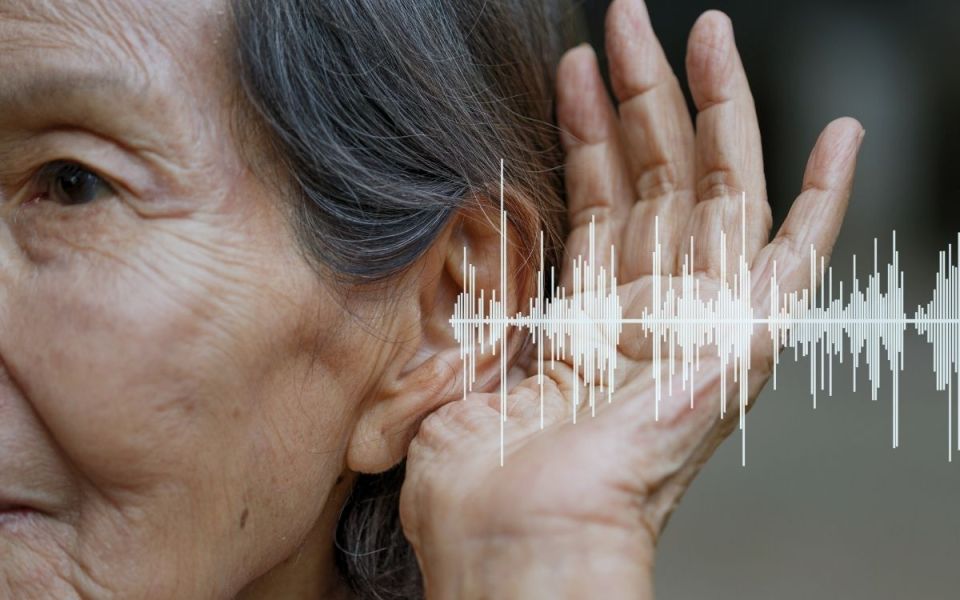
Hearing loss is miserable, even though sometimes the construction crews next door make me consider the benefits. It is unfortunately common and affects many people worldwide. Actually, construction and other occupations are major drivers of hearing loss, with a significant portion of that loss linked to loud noise.[1] Additionally, some medications and diseases can also damage hearing.[1] Hearing loss affects around one in every five people, which is around 1.5 billion people worldwide.[2] It disproportionately affects older people. Hearing loss often begins in people in their 40s, and more than 60% of those affected are over 50.[1,3] Hearing loss doesn’t just help you ignore jackhammers and backup alarms; however, it has also been identified as a major risk factor for tinnitus (ringing or buzzing in your ears) and dementia.[3]
The way hearing works is really amazing. Sound waves compress air, which vibrates the eardrum. This converts the sound energy into mechanical vibrations that wiggle tiny hairs in the inner ear. As each hair wiggles, it sends a small signal to the brain, which interprets different patterns as distinct sounds. There are several types of hearing loss, and many involve damage to the hair cells, eardrum, middle-ear structures, or the auditory nerve that carries signals to the brain. Cochlear synaptopathy is a common form of early hearing loss in which the link between inner-ear hair cells and the auditory nerve is damaged.[1]
Cochlear synaptopathy, also called hidden hearing loss, is like a careless shovel crew digging into and damaging your internet cable at 2:46 p.m. on a workday before an important meeting while they are trying to expand your neighbor’s driveway.[1] The whole internet is still there, delivering ads and AI slop to kids around the world. Your laptop is still on, showing a small spinning loading icon and an error that says “Can’t connect to server,” even though you've hit “refresh” 15 times per minute. All the equipment is in place, but the last leg of the connection isn’t working. With cochlear synaptopathy, the ear hair is still working, and the nerve is still intact, but the last leg of the connection, the synapse, is damaged. This synapse is a particularly vulnerable part of the hearing pathway, and damage can be permanent.[1] Cochlear synaptopathy is called hidden hearing loss because hearing tests can still show broad function and the hair cells are still intact, but many hearing tasks (like deciphering speech in a noisy room) can be extremely difficult.[5]
Luckily, new hope is emerging in this area through therapies being investigated in clinical trials. Neurotrophins are specialized hormones that stimulate nerve growth and have been investigated as potential treatments for Alzheimer’s disease.[4] That has not proved successful so far, but these small molecules may find a new home in treating cochlear synaptopathy! One medication in particular, paliroden, has entered phase II clinical trials and has been shown to repair synapses in animal models.[4] This investigational medication is injected through the eardrum, where it activates neurotrophins in the ear that stimulate synapse regrowth and are theorized to help with hidden hearing loss.[4] This kind of repurposing of previously unsuccessful medications is like finding out the lead shovelsmith next door has a fiber optic repair kit in their truck. This study is still in early phases, but if it proves successful, we may unearth the first disease-altering medication for hearing loss.
Creative Director Benton Lowey-Ball, MWC, BS, BFA
|
|

References
[1] Ponsot E. Unraveling hidden hearing loss. Elife. 2024 Dec 5;13:e104936. https://doi.org/10.7554/eLife.104936
[2] Haile LM, Kamenov K, Briant PS, Orji AU, Steinmetz JD, Abdoli A, Abdollahi M, Abu-Gharbieh E, Afshin A, Ahmed H, Rashid TA. Hearing loss prevalence and years lived with disability, 1990–2019: findings from the Global Burden of Disease Study 2019. The Lancet. 2021 Mar 13;397(10278):996-1009. https://doi.org/10.1016/S0140-6736(21)00516-X
[3] Livingston G, Huntley J, Liu KY, Costafreda SG, Selbæk G, Alladi S, Ames D, Banerjee S, Burns A, Brayne C, Fox NC. Dementia prevention, intervention, and care: 2024 report of the Lancet standing Commission. The lancet. 2024 Aug 10;404(10452):572-628.
[4] Liu H, Wang L, Su W, Xie XQ. Advances in recent patent and clinical trial drug development for Alzheimer’s disease. Pharmaceutical patent analyst. 2014 Jul 1;3(4):429-47. https://doi.org/10.4155/ppa.14.22
[5] Liberman MC, Kujawa SG. Cochlear synaptopathy in acquired sensorineural hearing loss: Manifestations and mechanisms. Hearing research. 2017 Jun 1;349:138-47. https://doi.org/10.1016/j.heares.2017.01.003
[6] Bramhall N, Beach EF, Epp B, Le Prell CG, Lopez-Poveda EA, Plack CJ, Schaette R, Verhulst S, Canlon B. The search for noise-induced cochlear synaptopathy in humans: Mission impossible?. Hearing research. 2019 Jun 1;377:88-103. https://doi.org/10.1016/j.heares.2019.02.016