
Degenerative Joint Disease is Your Body's Squeaky Wheel
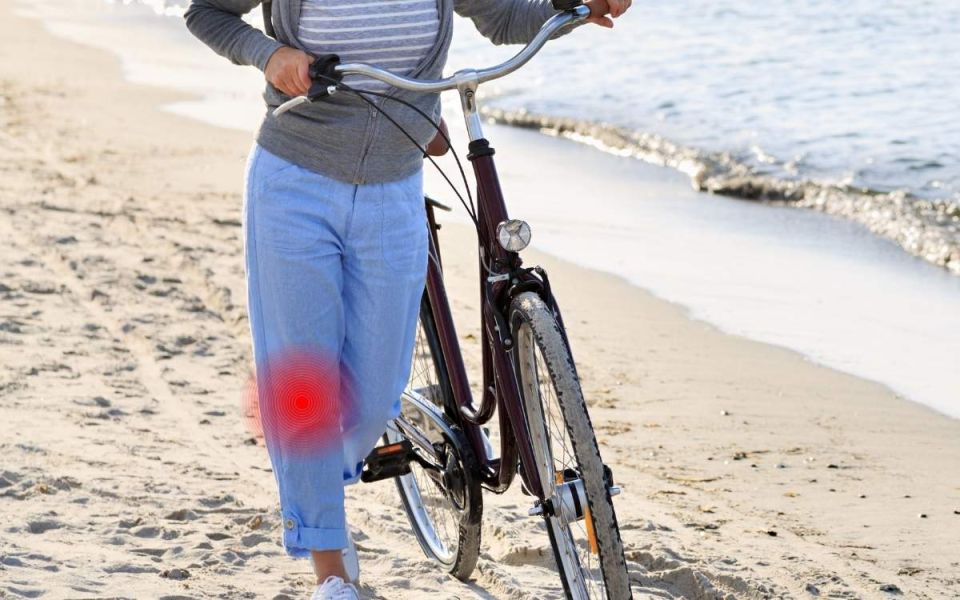
I have this cousin who despises maintenance. He will happily order a new bike to ride, but refuses to do even basic upkeep like lubricating the chain, cleaning the gears, or even just inflating the tires. This means his bike is creaky, squeaky, and slow, and that its drivetrain rapidly deteriorates in a manner similar to degenerative joint disease.
Degenerative joint disease (DJD) is a common condition that affects somewhere between 14 and 44% of people at some point in their lives, with higher rates for people with knee injuries and those who are obese.[1,2] The condition describes progressive changes to tissues within a joint, including the cartilage at the end of bones, the fluid lining between bones (called synovium), and the bones themselves.[2] Risk factors for degenerative joint disease include:[2,3]
- Age
- Sex, with women at higher risk
- Family history and genetics
- Medical conditions, including high blood pressure, obesity, increased bone mineral density, and inflammation
- Joint issues, including deformities, unequal leg lengths, injuries, and surgery
- High physical demands, from occupation or elite sports
The most common form of degenerative joint disease is osteoarthritis, sometimes just called arthritis.[4]
People with osteoarthritis can experience several symptoms, including pain, stiffness, swelling, and dysfunction of the affected joint.[2,4] These symptoms and the joint degradation can make for an uphill battle in daily life by affecting joint function, mental health, sleep, and employment.[2] DJD can quickly spin out of control for many people.
Osteoarthritis and other degenerative joint diseases are like a peloton of related joint problems that reinforce each other in the worst way. One of the key components of DJD is stress to the joints, especially the knees, hips, hands, and spine.[4] Along with misaligning a joint, stress can cause damaging inflammation inside the joints and bones themselves.[4] Stress may be a factor in changing bone thickness and shape near a joint, which doesn’t allow them to be as flexible as is needed.[4] At the cap of each bone in a joint is a protective, low-friction, flexible layer of cartilage.[3] Cartilage is strong and has a limited capacity to repair.[3] In the presence of joint stress or other risk factors, cells can mistakenly release degrading enzymes and inflammatory chemicals.[4] On top of this, immune cells in the joint fluid itself can become overactive, signaling for more inflammation.[4] Together, cells in the bones, cartilage, and synovium fluid can all enter a feedback loop where they collectively inflame the joint, degrade protective cartilage, and lead to bone rubbing directly against each other, which causes pain, damage, and deformity.[4]
Degenerative joint disease isn’t the result of neglect or poor joint care, but looking at my cousin’s bike may help understand what’s going wrong here. He doesn’t align his gears, rides on the beach, and doesn’t even bother to rinse or lubricate the chain. As a result, the chain is out of alignment, causing stress on the gears. This could cause damage over time, but the problem is exacerbated by sand throughout the chain. Sand degrades the little lubrication left by the manufacturer and acts like sandpaper, filing the gears down and causing a poor fit. This creates a feedback loop where the chain doesn’t seat correctly, sand can accumulate around the gear teeth, and the chain misalignment amplifies into a rapidly degrading, noisy, squeaky, and annoying biking experience.
For my cousin, the solution to this is obvious: be more mindful of preventative maintenance. Some of this advice may be helpful for those with DJD as well; the American College of Rheumatology and Arthritis Foundation strongly recommend several non-pharmaceutical approaches to treating DJD, including:[5]
- Exercise
- Weight loss in overweight and obese patients
- Tai chi
- Cane use
- Supportive braces
- Self-efficacy: a belief in the ability to manage symptoms and remain active
These are rough analogs to the preventative maintenance my cousin needs, though things like chain oil (which he HAS in the GARAGE) would also go a long way in helping. Similarly, several medications may be prescribed or recommended, including:[5]
- NSAIDs like ibuprofen
- Steroid injections
- Capsaicin
- Acetaminophen
- Duloxetine
- Tramadol
These treatments are only recommended selectively, depending on the specific joint and patient affected, and must be discussed with a doctor first; otherwise, it might be like my cousin putting chain oil on the brakes - not a great idea. Unfortunately, just applying chain oil to a sandy bike chain doesn’t make too much of a difference; these medications mainly lower pain and improve function, but don’t alter the course of the disease itself. Clinical trials are gearing up to investigate new medications that may help treat the DJD itself. There are many potential medical targets, including overactive immune cells in synovium, inflammatory molecules in the bones, signaling molecules and enzymes in the cartilage, and medications that may help rebuild damaged cartilage. With the help of researchers and volunteers, we may be able to unseat this damaging condition for millions of people. With even more luck, we may even be able to teach my cousin how to maintain a bicycle.
Creative Director Benton Lowey-Ball, MWC, BS, BFA
|
|

References
[1] Murphy L, Schwartz TA, Helmick CG, Renner JB, Tudor G, Koch G, Dragomir A, Kalsbeek WD, Luta G, Jordan JM. Lifetime risk of symptomatic knee osteoarthritis. Arthritis Care & Research: Official Journal of the American College of Rheumatology. 2008 Sep 15;59(9):1207-13. https://doi.org/10.1002/art.24021
[2] Allen KD, Thoma LM, Golightly YM. Epidemiology of osteoarthritis. Osteoarthritis and cartilage. 2022 Feb 1;30(2):184-95. https://doi.org/10.1016/j.joca.2021.04.020
[3] Mobasheri A, Batt M. An update on the pathophysiology of osteoarthritis. Annals of physical and rehabilitation medicine. 2016 Dec 1;59(5-6):333-9. https://doi.org/10.1016/j.rehab.2016.07.004
[4] Fusco M, Skaper SD, Coaccioli S, Varrassi G, Paladini A. Degenerative joint diseases and neuroinflammation. Pain Practice. 2017 Apr;17(4):522-32. https://doi.org/10.1111/papr.12551
[5] Kolasinski SL, Neogi T, Hochberg MC, Oatis C, Guyatt G, Block J, Callahan L, Copenhaver C, Dodge C, Felson D, Gellar K. 2019 American College of Rheumatology/Arthritis Foundation guideline for the management of osteoarthritis of the hand, hip, and knee. Arthritis & rheumatology. 2020 Feb;72(2):220-33. https://doi.org/10.1002/acr.2413