
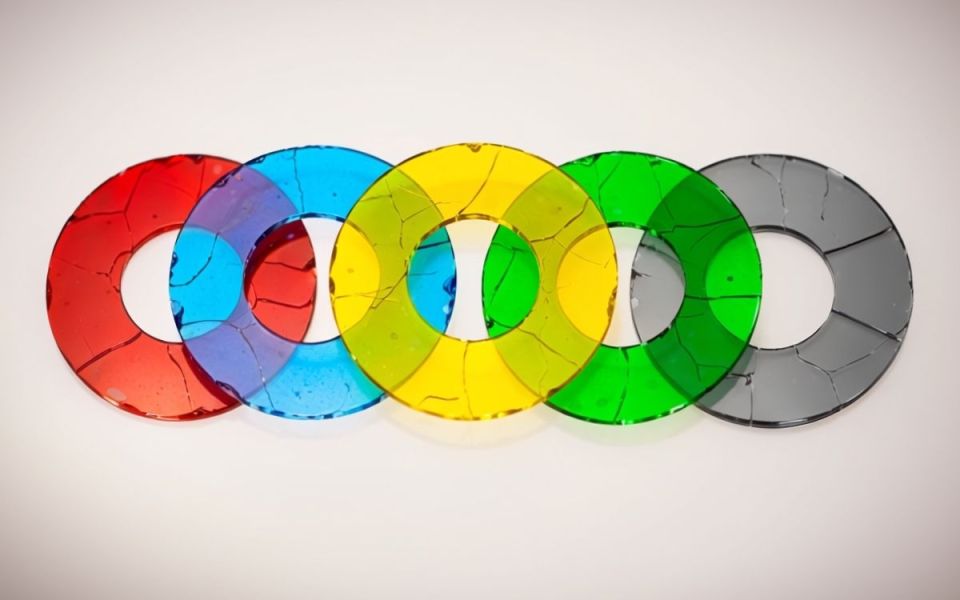
Olympic Coverage Was Fragmented, Clinical Research Coverage Is Not
Audio
|
|

Transcripts
Transcript generated by AI
Announcer: 0:00
Welcome to the MedEvidence Monday Minute Radio Show, Hosted by Kevin Geddings of WSOS St. Augustine Radio and powered by ENCORE Research Group. Each monday morning, Dr. Michael Koren calls in to bring up the latest medical updates with insightful discussions. MedEvidence is where we help you navigate the real truth behind medical research from both a clinical and research perspective. So sit back, relax, and get ready to learn about the Truth Behind the Data in medicine and healthcare. This is MedEvidence!
Kevin Geddings: 0:31
Put your hands together. A lot of folks are putting their hands together for the closing ceremonies of the Olympics on yesterday. Which is I thought, you know, I I've only thought some highlights of the closing ceremony. Some people don't really care about the ceremonies because there's no real athletic competition involved. But there's a lot of symbolism, and I thought being in an old Colosseum with the gladiators where they used to perform, that was kind of cool. What did you think, Dr. Michael Koren?
Dr. Michael Koren: 0:55
Good morning, Kevin. Good morning. Well, I did not watch the closing ceremonies, and I actually was a little disappointed in NBC's coverage since it was very fragmented. I don't know if you experienced this as well, but you know, I typically would watch the Olympics while I was at the gym in the evenings, and all the things that were on network TV were the less popular things. So it did help me gain an appreciation for curling, which is on quite a bit during the the network broadcast. But I was very disappointed that the hockey gold medal matches, both for the men's and the women's finals, was not on network TV, at least in my market.
Kevin Geddings: 1:35
Right.
Dr. Michael Koren: 1:36
And it's unfortunate because it was absolutely huge for the United States. It's one of the greatest sports moments for the United States ever, quite frankly, because here is a a sport that is really one of the signature events of the Olympics, and we've won both the women's and the men's finals, both in dramatic fashion. Both were won in a score of in a score of two to one against the Canadians, who are typically the world powerhouse in hockey. Both were won in overtime and both were won in really dramatic fashion. And unfortunately, at least in our market, it wasn't on network TV. So I just felt like we got robbed of this collective moment as Americans to enjoy this, particularly in Florida that's had great success in ice hockey in recent years with the both the Florida Panthers and the Tampa Bay Lightning winning multiple Stanley Cups. And the one who scored the winning goal for the men, Jack Hughes, was born in Orlando.
Kevin Geddings: 2:33
Wow
Dr. Michael Koren: 2:33
So I felt unfortunately we we lost that collective moment. And I actually did a little research to to see what the viewership was, and it turns out that the peak of viewership for the men's finals, which was early in the morning on Sunday, was 9.3 million Americans versus the miracle on ice, which is when the US beat the Soviet Union in 1980 in the semifinals. That wasn't even a final match. In the semifinals, there were thirty-four point two million Americans watching that when the population of the United States was significantly smaller than it is today. So again, a great moment for the US, great moment for the for both men's and women's hockey teams, but unfortunately not a great collective moment for the US population.
Kevin Geddings: 3:18
Yeah. No, you're right. That was a chance and opportunity for us to all come together and agree on something for at least, you know, a couple of hours, right, Dr. Koren?
Dr. Michael Koren: 3:26
Yeah, for the whole weekend. The women's was on Friday, the men's was on Sunday. Yes. So it was it was quite a story that evolved over the weekend. But to your point, absolutely.
Kevin Geddings: 3:35
Yeah. Yeah. Yeah. It was frustrating because you're right. The coverage was spread out over CNBC and USA Network, all the NBC or all the uh Comcast-owned networks. And so it was hard to figure out, you know, what to watch or get everybody to be watching something all at the same time. And then broadcast TV often aired, you know, two hours of curling, which, you know, for some people is good, for some others not so much, right?
Dr. Michael Koren: 3:57
Well, again, I enjoyed it. I I I have actually been curling. It's it's kind of an interesting sport. It's fascinating how you can push a rock down the ice for whatever it is, 40 yards, and get it to within a few inches of where you want it to land. It's pretty amazing.
Kevin Geddings: 4:13
Right.
Dr. Michael Koren: 4:13
But but certainly that's not one of the more popular sports in the Olympics.
Kevin Geddings: 4:17
Yeah. And by the way, that's uh Dr. Michael Koren. He joins us on Monday mornings. He's a medical doctor, of course, cardiologist, and research scientist. Any interesting clinical trials that you're recruiting for at the moment, Dr. Koren?
Dr. Michael Koren: 4:29
Well, there are lots. And unlike the Olympic coverage, which was fragmented, our coverage is very comprehensive. So, for example, if people are interested in learning more about their blood pressure, we have a very interesting blood pressure study that's ongoing as we speak, looking at blood pressure treatments that may last up to a month at a time. And we have some really interesting things in the cholesterol space, of course, particularly with lipoprotein(a). But quite frankly, any cholesterol issue or blood fat issue that you're concerned about, we can address again in a comprehensive, non-fragmented way. So we encourage you to do that. We have a lot of stuff for fatty liver disease. Same deal. You'll get a fibro scan, which is a neat test to see whether or not you have fatty liver disease, or the many types of technologies that we have community members participate in that's not generally available. And then uh you know, we're excited that we'll be doing some gene editing studies coming up for cholesterol issues and perhaps blood pressure issues. Now, there are still final details being worked out, but it looks like we'll be starting these in the spring. So if people are fascinated or interested in gene editing, give us a call. We can tell you what may be coming to our local community, which will be one of the first, if not the first, in the United States to offer these type of programs. So we're excited about all that.
Kevin Geddings: 5:50
Yeah, regardless of your health condition or if you or someone you love or care about has a chronic health condition, there are some very interesting and uh potentially beneficial clinical trials that are ongoing that you can participate in. But Dr. Michael Koren, we appreciate you taking time out of your busy schedule. We'll speak with you again next week, okay? A
Dr. Michael Koren: 6:06
ll right, be well. Have a great week.
Announcer: 6:08
Thanks for joining the MedEvidence Podcast. To learn more, head over to MedEvidence.com or subscribe to our podcast on your favorite podcast platform.