
The Secret Box That Changed How Medicines Are Manufactured
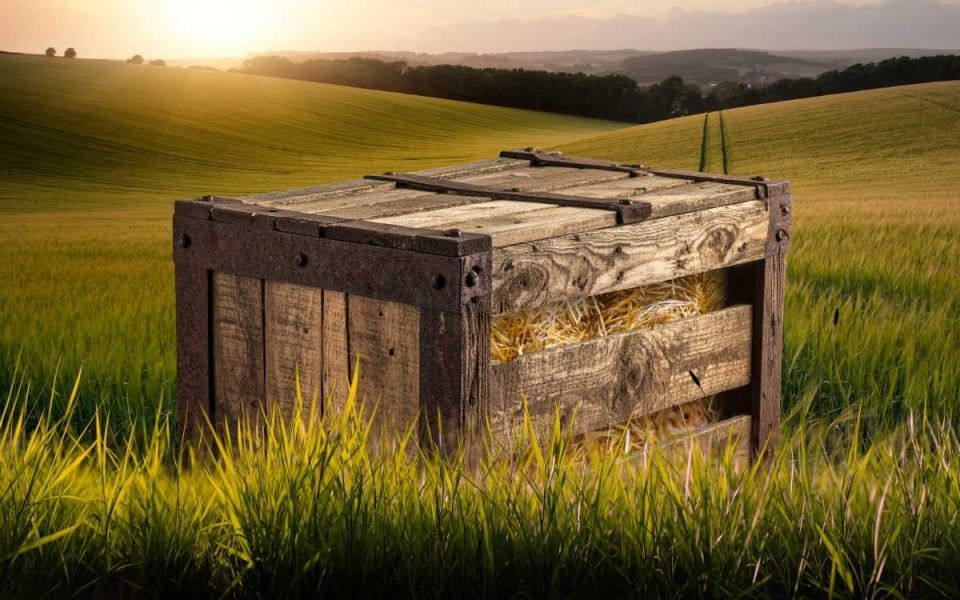
In December 1948, the Chinese civil war was nearing its end, and the Republic of China was rapidly losing ground. Zhangjiakou was captured by PLA forces, the cities of Tianjin and Beijing were weeks from falling to communist control, and Nanking would be lost within six months. Foreign nationals, including Americans, faced increasing pressure to evacuate the country while they still could. Against this dire background, Dr. C.H. Hu (later sentenced to “re-education” by the CCP) gifted a box to Dr. Robert Briggs Watson.[1] This box was smuggled some 200 miles through intermittent communist control to Shanghai, where it was loaded onto a plane and flown to San Francisco, USA.[1] This box would make its way to Tumblebrook Farm in upstate New York, a rodent breeding facility.[2] The twenty live Chinese hamsters inside the box would change the way medicine was manufactured for the next 75+ years.[1]
Scientists identified Chinese hamsters as potentially scientifically important as early as 1919, when they were used to study parasites and diseases.[1] Early attempts to export them from China failed, as the rodents do not breed easily in captivity.[1] In fact, Tumblebrook Farm was the first time Chinese hamsters were successfully bred outside of China.[1,2] These hamsters were given to schools and scientific facilities, and eventually their ovary cells were harvested and coaxed into permanence, becoming a now-famous CHO (Chinese hamster ovary) cell line.[1] These cells divide to reproduce without using living hamsters and are particularly useful for the manufacture of modern medicines.
Gone are the days of prescribing “bigness of nutmeg” or “swamp root”; medicines today consist of extremely pure molecules, individual hormones, specific antibodies, virus fragments, enzymes, and more. Some of these can be created in a chemistry lab, but for complex items, like proteins, we rely on cells to do the legwork. Proteins are large, complicated, 3D structures.[3] Genes are bits of DNA that code for proteins; they instruct cells to assemble molecules called “amino acids” in a specific order, but that’s not enough.[3] Finishing a protein requires glycosylation (the addition of sugars to a protein) and folding.[3] These steps also occur inside a cell as part of protein development, but the specifics differ across cell types; for example, bacteria don’t have the correct sugars for mammalian proteins.[3,4] CHO cells are better than bacteria or yeast cells for creating complex mammalian proteins like antibodies and hormones because they can perform these mammal-specific protein steps.[4] CHO cells are also hardy, have a small chromosome count, resist human pathogens, are safe, and reproduce quickly and indefinitely.[1,4]
These features have helped elevate CHO cells to the “gold standard” for mammalian cellular biology, but their real advantage is the ability to easily modify their genetic code.[1,4] Cells produce proteins, but in medical manufacturing they need to produce specific proteins (called recombinant proteins) that the cell doesn’t usually make.[4] CHO cells are relatively easy to genetically engineer to make specific, novel proteins and avoid making unrelated, unwanted proteins.[4] The idea is simple even if the reality is quite complex: scientists “smuggle in” new DNA, which is incorporated into the CHO cells. The cells read the DNA code and make the associated protein, glycosylating and folding it in large quantities.[4] Scientists then harvest these cells, purify the target protein, and are left with a modern-day wonder drug like Humira or Enbrel, for example.[5] Around 70% of biologics (medicines that come from living organisms) are made with CHO cells.[5] New medications, including ones for conditions like COPD, continue to be made with CHO cells. It’s pretty impressive that, after seven decades, countless lives have been improved and saved because of a little box smuggled across borders by some very forward-thinking scientists.
Creative Director Benton Lowey-Ball, MWC, BS, BFA
|
|

References:
[1] Life Sciences Foundation. Vital tools A brief history of CHO cells. LSF Magazine. 2015 Winter.
[2] Wechsler, A. Brant Lake’s gerbil whisperer. Adirondack Life. 2023, Jun. https://www.adirondacklife.com/2013/08/12/from-the-archives-the-gerbil-genius-of-brant-lake/
[3] Berg JM, Tymoczko JL, Stryer L. Biochemistry [7th Edition]. [New York, New York]: W.H. Freeman and Company [2012]. p. 25-65
[4] Jayapal KP, Wlaschin KF, Hu W, Yap MG. Recombinant protein therapeutics from CHO cells-20 years and counting. Chemical engineering progress. 2007 Oct 1;103(10):40.
[5] Cell line development market to grow at 10.1% CAGR during 2025–2034. Market.us. [Website accessed 2026, September 09]. https://market.us/press-release/cell-line-development-market/