Tooth Regeneration Sounds Like a Great Idea
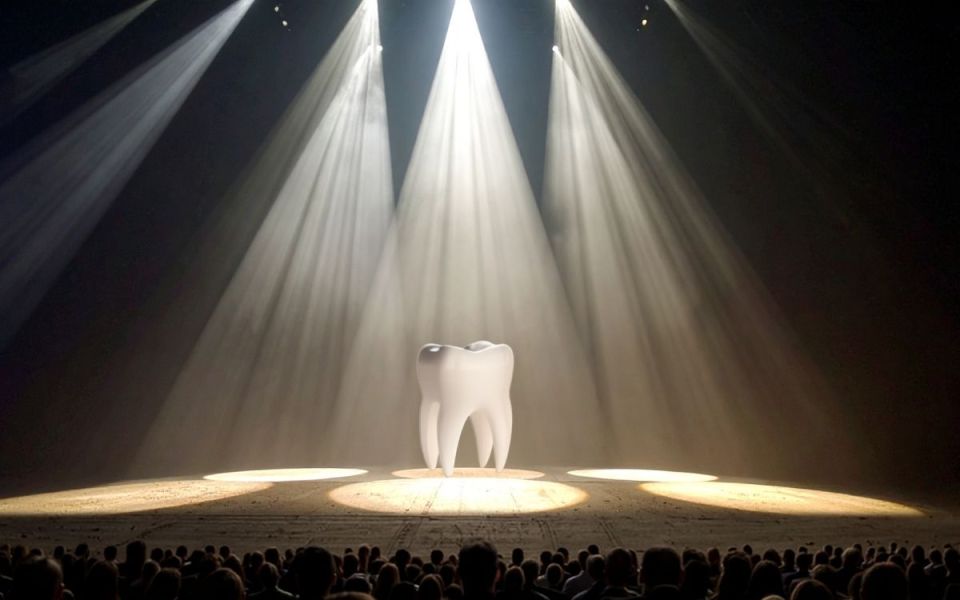
Playing a live music performance can be stressful, especially for someone who hasn’t done it before. Years of practice can melt away before a crowd when it’s the “real deal.” Even more, things can and will go wrong, throwing everything off and requiring correction. Dress rehearsals are a temporary run-through of the show, with as much similarity to the live show as possible to help work out kinks - and help alleviate those butterflies in the stomach. Our mouths do a similar performance: we have “dress rehearsal” baby teeth, which fall out to be replaced by our permanent adult teeth. Similar to how a broken instrument can cause problems during a live show, things can and do go wrong with our teeth.
Just like with any performance, a stage manager and/or conductor are necessary to initiate and organize the symphony of growing teeth. The developing body has to balance a complex composition as it grows teeth.[1] Teeth are highly specialized bones with specific crown shapes, growth directions, movement, and an extremely hard outer layer of enamel.[1] In humans, the main organizers of tooth growth are a pair of protein classes called bone morphogenic protein (BMP) and Wnt.[2,3] There are over 30 BMP molecules present in practically all tissues in the body.[3] BMP signal proteins are critical to embryonic development, stem cell differentiation, and bone formation.[3] In the mouth, BMP directs tooth shape and where the tooth will go.[1] Wnt proteins are like the sound engineer; they direct cell growth and patterns.[1] In the mouth, Wnt helps to initiate tooth buds (where tooth formation starts), shape, growth direction, and development of the protective enamel.[1,2]
At the end of the night, the show must come to a close. The dress rehearsal hopefully ironed out any problems, and we hope the live show went off without a hitch. In the body, the closing curtain for tooth development is Uterine Sensitization-Associated Gene 1 (USAG-1).[2] This protein inhibits BMP and Wnt after our last permanent teeth come in, telling them to stop producing teeth; the show is over.[3] But, as anyone who has been to a battle of the bands knows, things frequently go wrong during the live show. Wisdom teeth can come in sideways, gaps or overlaps can form between teeth, genetic disorders can result in fewer teeth than normal, and people lose teeth to accidents or disease.[4]
Luckily, when we want a show to go on, we can sometimes convince the band to play an encore performance. When this happens, the curtain sweeps back open, the band steps back out, and plays a bluegrass rendition of “Baby Shark.” In the world of teeth, this has been a pie-in-the-sky dream: tooth regeneration. That dream has been inching closer to reality after discoveries in mice that suppressing USAG-1 resulted in a third dentition.[2] Mice with suppressed USAG-1 had increased levels of BMP and Wnt, which resulted in successful regeneration of teeth.[2] In 2024, this moved from the lab to clinical trials at the Kyoto University Hospital in Japan, and the first-in-human trials of USAG-1-inhibiting medications began.[2] These initial investigational trials are focused on evaluating medication safety, but subsequent trials will begin soon with the goal of restoring lost teeth and improving dental health and function.[2] Investigations like this take a lot of time, and the earliest guess for limited approval of such medications in Japan would be by the year 2030.[2] If all goes well, people with tooth loss or genetic differences may be looking at a tooth comeback tour in the next five years!
Creative Director Benton Lowey-Ball, MWC, BS, BFA
|
|

References
[1] Novacescu D, Dumitru CS, Zara F, Raica M, Suciu CS, Barb AC, Rakitovan M, Armega Anghelescu A, Cindrea AC, Diana S, Gaje PN. The Morphogenesis, Pathogenesis, and Molecular Regulation of Human Tooth Development—A Histological Review. International Journal of Molecular Sciences. 2025 Jun 27;26(13):6209. https://doi.org/10.3390/ijms26136209
[2] Moradi Z, Karimi M, Kolahdouz S, Arya N, Akheshteh V, Ayanzadeh F, Aalizadeh Y, Moravvej H, Keshavarzi M, Basri A. USAG‐1 and Regenerative Dentistry, Therapeutic Implications and Future Directions: Review of the Literature. Clinical and Experimental Dental Research. 2026 Feb;12(1):e70301. https://doi.org/10.1002/cre2.70301
[3] Murashima-Suginami A, Takahashi K, Sakata T, Tsukamoto H, Sugai M, Yanagita M, Shimizu A, Sakurai T, Slavkin HC, Bessho K. Enhanced BMP signaling results in supernumerary tooth formation in USAG-1 deficient mouse. Biochemical and biophysical research communications. 2008 May 16;369(4):1012-6. https://doi.org/10.1016/j.bbrc.2008.02.135
[4] Takahashi K, Kiso H, Mihara E, Takagi J, Tokita Y, Murashima-Suginami A. Development of a new antibody drug to treat congenital tooth agenesis. Journal of Oral Biosciences. 2024 Dec 1;66(4):1-9. https://doi.org/10.1016/j.job.2024.10.002