What Avocados and FibroScan Teach Us About Liver Health
Avocados are tasty, heart-healthy, and nutrient-dense, but they can be inconsistent. Choosing a perfect avocado can be a real challenge; it must have the right amount of give without being squishy or mushy. Even then, outside visual and tactile examination can only go so far: the inside of an avocado can be discolored, bruised, fibrous, or inconsistently ripe, leading to a ruined meal.[1] The main problem is that in order to effectively assess the condition of the avocado, we generally have to cut it open, at which point we may as well just eat it (unless it’s gross).[1] This challenge of “seeing inside” isn’t unique to avocados; it also applies to internal organs like the liver.
Avocados are my favorite fruit,[2] and the liver is one of the most important organs in the body. It is essential for digestion, metabolism, the immune system, detoxification, and regulation of the levels of most chemicals in the blood.[3] Chronic liver diseases develop over time, get worse over time, and can lead to serious complications, including inflammatory metabolic dysfunction-associated steatohepatitis (MASH), liver scarring called cirrhosis, and liver cancers like hepatocellular carcinoma.[4] The most prevalent chronic fatty liver disease is metabolic-associated steatotic liver disease (MASLD), previously called non-alcoholic fatty liver disease (NAFLD), and commonly known as fatty liver.[4] Fatty liver is estimated to affect over 1 in 3 people worldwide and is a leading cause of liver transplantation.[4] Risks of developing fatty liver are hard to avoid, but include obesity, a sedentary lifestyle, and age, the hardest to avoid of them all.[4]
Liver disease can progress dangerously without obvious symptoms. Chronic liver diseases like fatty liver take time to develop, but without a way to see what’s going on, they can easily become dangerous without our even knowing we are at risk. It’s like an avocado that has been exposed to too much cold: on the outside, they look great, they feel great, but when you open them up, the inside can be fibrous or bruised.[1] Clearly, we need a delicate way to look inside to find out what’s going on.
Liver biopsy is considered the “gold standard” for diagnosing fatty liver disease.[5] This is an invasive procedure where a small sample of liver tissue is removed and examined by a pathologist.[5] This gives the most accurate assessment of the state of the liver, but it takes significant time, is labor-intensive, is frequently expensive, and carries a small risk of complications.[5] This makes it a great choice for those who know they are at risk, but before we get to that point, we need a screening tool. Think of it like choosing a ripe avocado: we could theoretically remove the exocarp (skin) and use a penetrometer to test the softness (in PSI), but that’s not realistic in the store. Instead we can screen the avocados by looks (dark, free of brown “scarring”) and feel (about the same as a peach).[1] By screening, we can quickly sort out which avocados may have trouble before using expensive, time-consuming tools or cutting them open.
A few fatty liver screening techniques have been used in the past, including magnetic resonance imaging (MRI), ultrasound, and computed tomography (CT) scans.[5] Unfortunately, MRI and CT scans are expensive, and a normal ultrasound is neither sensitive nor specific enough for quality screening.
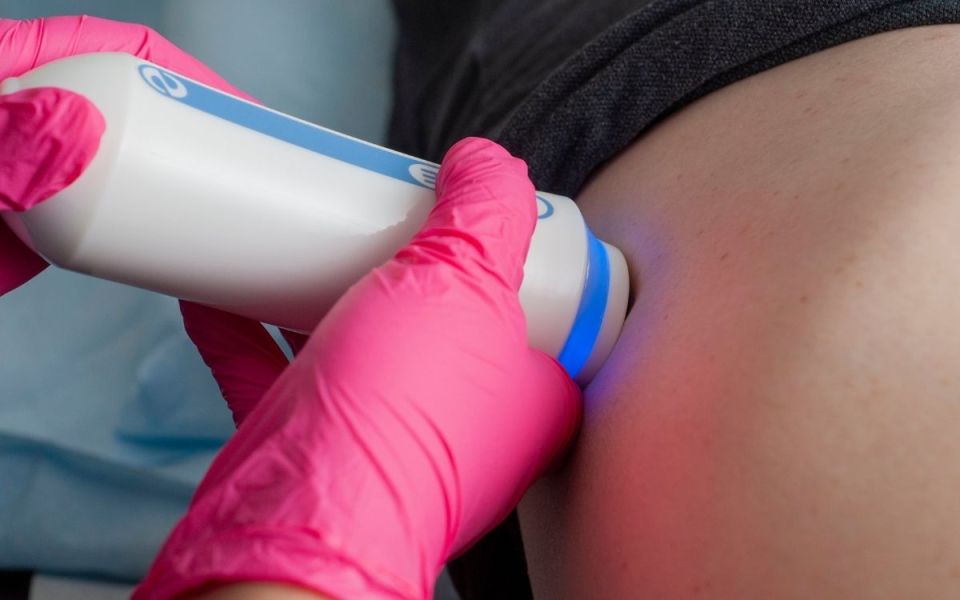
Enter transient elastography. This technology, commonly referred to by the company behind the tech, FibroScan, addresses many of the limitations with other screening methods. It’s non-invasive, quick, cheap, and has been specifically developed to measure liver stiffness and fat accumulation in the liver.[6] Transient elastography works by emitting an ultrasound wave which passes through the liver.[6] The innovation is that it measures the speed at which this wave crosses the liver, giving an indication of stiffness.[6] This helps measure the liver’s health in general, but transient elastography has another trick up its sleeve, the controlled attenuation parameter (CAP).[6] While liver stiffness is measured by the speed of the wave, CAP evaluates how quickly the strength of an ultrasound wave decreases across the liver, which changes based on the amount of fat in the liver.[6] The CAP score is typically integrated into a normal FibroScan. Combined, transient elastography provides insight into liver stiffness and fat content, and is an essential tool for screening those at risk of fatty liver disease and to help those with fatty liver get an indication of how the disease is progressing.[6]
Transient elastography is used worldwide, but hasn’t seen much use in the United States due to low reimbursement rates from insurance companies. Luckily, clinical research offices typically don’t engage with the insurance system and are highly incentivized to use inexpensive, low-labor tools that provide rapid, accurate data. As a result, many clinical research sites and studies regularly use transient elastography. Some research sites even offer free screening transient elastography to the public in an effort to identify people who may benefit from studies targeting a range of liver issues. Avocados may be delicious, but free liver screenings might be better still.
Creative Director Benton Lowey-Ball, MWC, BS, BFA
|
|

References
[1] Hass Avocado Board. Avocado Quality Manual: A Guide to Best Practices for Each Step of the Supply Chain [Internet]. Available from: https://hassavocadoboard.com/avocado-quality-manual/
[2] Benton Lowey-Ball. Avocad-Ode. In: Allpoetry. 2026.Available from https://allpoetry.com/poem/19042255-Avocad-Ode-by-Benton2
[3] Kalra A, Yetiskul E, Wehrle CJ, Tuma F. Physiology, liver. InStatPearls [internet] 2023 May 1. StatPearls Publishing. https://www.ncbi.nlm.nih.gov/books/NBK535438/
[4] Wong VW, Ekstedt M, Wong GL, Hagström H. Changing epidemiology, global trends and implications for outcomes of NAFLD. Journal of hepatology. 2023 Sep 1;79(3):842-52. https://doi.org/10.1016/j.jhep.2023.04.036
[5] Troelstra MA, Witjes JJ, van Dijk AM, Mak AL, Gurney‐Champion O, Runge JH, Zwirs D, Stols‐Gonçalves D, Zwinderman AH, Ten Wolde M, Monajemi H. Assessment of imaging modalities against liver biopsy in nonalcoholic fatty liver disease: The Amsterdam NAFLD‐NASH cohort. Journal of Magnetic Resonance Imaging. 2021 Dec;54(6):1937-49. https://doil.org/10.1002/jmri.27703
[6] Rinaldi L, Giorgione C, Mormone A, Esposito F, Rinaldi M, Berretta M, Marfella R, Romano C. Non-invasive measurement of hepatic fibrosis by transient elastography: a narrative review. Viruses. 2023 Aug 13;15(8):1730. https://doi.org/10.3390/v15081730