
Winning the Cup by Silencing Food Noise
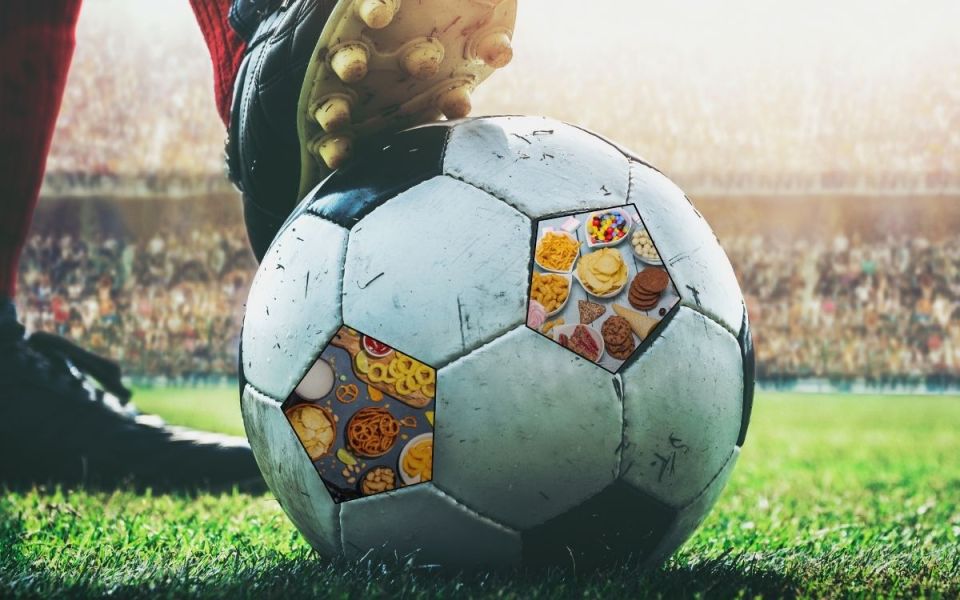
Lately, I've been watching more soccer and found myself comparing it to American football. Similarities include 11-person teams, running, scoring, and so on, but differences are legion. Scores in soccer are low, the ball is… ball-shaped, and they actually use their feet when playing. But the most striking difference, for a spectator at least, is the lack of commercial breaks. American football has 18-20 commercial breaks, totaling around an hour of commercials per game.[1] That means around ⅓ of an American football game is just commercials. These commercials add to what I call noise - things that interrupt the action, distract from the game, and kill momentum. We get used to this noise, but when something like the World Cup comes along, the lack of noise is deafening. Without constant commercial interruptions the game flows and I’m locked in; remove the noise and everything comes into focus.
“Noise” during an American football game is actually quite similar to the concept of food noise in everyday life. It’s normal to think about food sometimes, but for many people, these thoughts can become intrusive, persistent, and/or unpleasant, and are often referred to as food noise.[2] Food noise is defined as persistent, unwanted thoughts about food.[3] These thoughts are more intrusive and intense than normal thinking and planning about food, and can cause social, mental, and physical harm (like weight gain) to a person experiencing excessive food noise.[^!] Food noise isn’t just about wanting food, either. Thoughts about food can include worries about calories, diet, nutrition, and so on; as long as they are intrusive, constant, and about food, they are considered food noise.[2]
Food noise is dangerous. It can increase caloric intake, influence the quality of food eaten, and - importantly - can affect mental health and put undue pressure on people who experience food noise.[2,3] Food noise causes stress, shame, and can strain relationships.[2] Biologically, food noise can cause changes to the body, changing heart rate, blood pressure, sweat, and brain activity, prematurely start the digestive tract, and can even increase saliva production in the mouth.[3] This, along with psychological increases in attention, craving, anticipation, and preoccupation with food, can cause people to seek and eat food.[3] Ultimately, this leads to weight gain, behavioral feedback loops, and a reduced quality of life.[3]
Market forces drive the need for more and more commercials in the NFL, but what drives food noise? This remains an active area of research, but scientists have identified several influences. Some constant influences include genes, body weight, and food preference.[3] Some of the more variable influences include the time of day, the environment, being on a diet, and the amount of sleep.[3] These are like the pre-game, but the kickoff event is more acute; things like hunger, available food, and food marketing - like commercials in the middle of a big drive.[2,3] These influences act together to change psychology and cause constant, intrusive, unpleasant, food noise.
So what can be done? Unfortunately, one of our best methods of controlling weight, being on a diet, can actually increase food noise. When people are preoccupied with food (for instance, by counting calories), food noise increases and it can make sticking to the diet more difficult.[2] It’s like trying to just close your eyes during commercial breaks, not super effective. This is where some treatments shine. Patients report that bariatric surgery can reduce food noise, but the real star of late has been GLP-1 medications. Anecdotal evidence from patients on GLP-1 medications sound like the difference between football and American football: the noise is just gone.[3] In fact, many patients report that they become aware of the concept of food noise for the first time when taking a GLP-1 medication, as the sudden absence of intrusive thoughts provides relief to a problem they didn’t know they were having. GLP-1 medications and bariatric surgery are not miracles, however. They should be used in conjunction with diet, exercise, and counseling from medical professionals. They might not win the game on their own, but they might just turn down the noise enough to take home the cup.
Creative Director Benton Lowey-Ball, MWC, BS, BFA
|
|

References:
[1] Belson, K.. NFL games, commercials and the Super Bowl. New York Times [Internet]. 2025 Feb 8 [cited 2026 Jun 23]. Available from: https://www.nytimes.com/2025/02/08/business/nfl-games-commercials-super-bowl.html.
[2] Dhurandhar EJ, Maki KC, Dhurandhar NV, Kyle TK, Yurkow S, Hawkins MA, Agley J, Ho EH, Cheskin LJ, Sørensen TI, Wang XR. Food noise: definition, measurement, and future research directions. Nutrition & diabetes. 2025 Jul 8;15(1):30. https://www.nature.com/articles/s41387-025-00382-x
[3] Hayashi D, Edwards C, Emond JA, Gilbert-Diamond D, Butt M, Rigby A, Masterson TD. What is food noise? A conceptual model of food cue reactivity. Nutrients. 2023 Nov 17;15(22):4809. https://www.mdpi.com/2072-6643/15/22/4809