
A Flash of Insight for Heart Failure Treatment
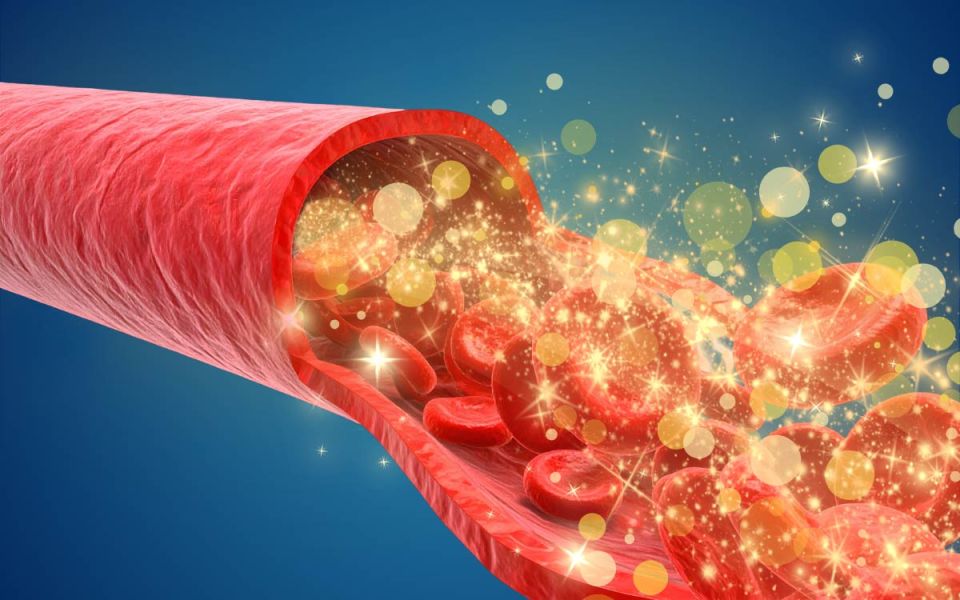
I remember as a kid, running around at dusk and chasing lightning bugs (fireflies). I don’t see many lightning bugs these days, but when I do, they fill me with a sense of calm relaxation. The small beetles make tiny lights that have a huge effect on my mood and mental health. Inside the human body, tiny chemicals can also have big effects on things like blood pressure, heart health, kidney function, and basically everything else the body does.
Chronic heart failure is a dangerous, often lifelong condition where the heart doesn’t pump enough blood to meet the body’s demands.[1] It is a leading medical cause of low quality of life or death, and affects tens of millions of people worldwide.[1] Heart failure is a big deal, and the body tries to compensate for reduced heart function in several ways.[1] One important compensation strategy is to increase the concentration of natriuretic peptides, a specific class of chemicals that affect the kidneys and heart.[2] Natriuretic refers to removing salt from the body through urine: the word is a combination of the Latin word natrium, meaning “sodium” (hence sodium being Na on the periodic table), and -uretic, which comes from -uresis, an ancient Greek word meaning “making water.” Peptides are molecules made of amino acids (the same substances as proteins), but are smaller than typical proteins. People with chronic heart failure tend to have increased amounts of natriuretic peptides, which help compensate for associated high blood pressure by removing salt and fluid from the bloodstream.[3,4,5]
Acronyms in this article:
|
Abbreviation |
Meaning | Explanation |
| NP | Natriuretic peptides | A class of signaling molecules found in the blood |
| Na | Sodium (from natrium) | An key element; part of dietary salt |
| ANP | Atrial natriuretic peptide | A natriuretic peptide produced in the atria of the heart |
| BNP | “Brain” natriuretic peptide | A natriuretic peptide produced in the ventricles of the heart |
| CNP | C-type natriuretic peptide | A natriuretic peptide produced by cells for local communication |
| NPR1 | Natriuretic peptide receptor-1 | A cellular receptor that senses natriuretic peptides ANP and BNP |
| NPR-A | Natriuretic peptide receptor-A | Another name for NPR1 (above) |
| GC-A | Guanylyl cyclase-A | Another name for NPR1 (above), describes the activity inside the cell instead of what activates it |
| cGMP | Cyclic guanosine monophosphate | Secondary messenger used for signaling inside of cells, activated by guanylyl cyclases |
There are three natriuretic peptides (NPs), and someone had the bright idea to name them ANP, BNP, and CNP. Of these, ANP and BNP are the most important and are released by the heart as it stretches to beat.[3] In fact, the “A” in “ANP” stands for “atria,” a part of the heart.[3] ANP and BNP travel through the bloodstream to link the heart and kidneys and help mitigate the effects of heart failure.[3] These molecules have to travel quickly to their targets before they are broken down, a process that happens within seconds or minutes.[1,3] The main target of ANP and BNP is a special receptor called NPR1 (naturiuretic peptide receptor-1), also called NPR-A or GC-A.[5,6]
NPR1 receptors are special for two reasons: what they do to cells and which cells they are attached to. NPR1 receptors are relatively large transmembrane proteins: they are positioned so that the part that interacts with ANP and BNP is outside of the cell and the part that changes cell behavior is inside of the cells.[3] This way the cells can detect increased levels of ANP and BNP in the bloodstream, and can amplify their signals by activating large amounts of signaling molecules (called cGMP) inside the cell.[3,4,6,7] NPR1 receptors are found on kidney, intestinal, fat, heart, lung, brain, and blood vessel cells, and the activation helps these cells act in a coordinated manner to mitigate the effects of heart failure.[3,4]
When NPR1 cells are activated by ANP and BNP, they can have specialized effects within the cell.[6] Signaling molecules can activate proteins, modify proteins, open signaling channels, and start enzymatic activity, changing cell behavior in a flash.[6] We see these changes physiologically as lower blood pressure due to:[3,4,5,8]
- Increased water and salt loss through urination
- Relaxing and opening of the blood vessels (vasodilation)
- Increased fluid seepage out of vessels to surrounding cells and into the intestines (vascular permeability)
- Changes in fluid balance in the kidneys
ANP and BNP activation is also linked to protection against an enlarged heart, protection against stiff scarring tissue around the heart, and inhibiting some molecules and systems that would normally increase blood pressure.[4,5] The upshot of all of this is bolt-clear: ANP and BNP activation of NPR1 has many benefits for people suffering from heart failure and high blood pressure.[3,5] Because of this, it makes sense that people with heart failure have increased levels of ANP and BNP as the body tries to compensate.[9] However, for some people the molecules don’t function properly and aren’t converted to their active forms, making this increase less effective than it should be.[9]
So, activating NPR1 shows a flicker of hope for those suffering from heart failure… can this be used by doctors? Yes! Synthetic ANP was routinely injected to provide benefits for people with heart failure and high blood pressure, but the quick degradation rate of natriuretic peptides meant this was a short-term fix with potentially limited long-term benefits.[1,4] Valsartan and Sacubitril don’t directly mimic natriuretic peptides, but instead inhibit the process of degrading them, allowing ANP and BNP to stick around longer than their normal flash-in-the-pan lifespan and increase their effectiveness.[1] These medications have been approved for use in patients with heart failure. Clinical trials have been investigating the use of new natriuretic peptide-like medications for several years.[1] These trials have had mixed results. One ANP analogue showed promise with decreased blood pressure, increased heart rates, and increased expression of cGMP signaling molecules.[1] Another investigational medication paradoxically acted as an antagonist, limiting the function of NPR1 receptors and worsening heart failure symptoms in some patients, leading to an early stop to the trial.[1] This remains an active area of research, with new investigational medications in the pipeline currently. If these prove successful, it may be like catching a lightning bug (firefly) in a jar: magical.
Creative Director Benton Lowey-Ball, MWC, BS, BFA
|
|

References:
[1] Dunn ME, Kithcart A, Kim JH, Ho AJ, Franklin MC, Romero Hernandez A, de Hoon J, Botermans W, Meyer J, Jin X, Zhang D. Agonist antibody to guanylate cyclase receptor NPR1 regulates vascular tone. Nature. 2024 Sep 19;633(8030):654-61. https://doi.org/10.1038/s41586-024-07903-1
[2] Rao S, Pena C, Shurmur S, Nugent K. Atrial natriuretic peptide: structure, function, and physiological effects: a narrative review. Current Cardiology Reviews. 2021 Nov 1;17(6):17-27. https://doi.org/10.2174/1573403X17666210202102210
[3] Kuhn M. Structure, regulation, and function of mammalian membrane guanylyl cyclase receptors, with a focus on guanylyl cyclase-A. Circulation research. 2003 Oct 17;93(8):700-9. https://doi.org/10.1161/01.RES.0000094745.28948.4D
[4] Potter LR, Abbey-Hosch S, Dickey DM. Natriuretic peptides, their receptors, and cyclic guanosine monophosphate-dependent signaling functions. Endocrine reviews. 2006 Feb 1;27(1):47-72. https://doi.org/10.1210/er.2005-0014
[5] Nishikimi T, Maeda N, Matsuoka H. The role of natriuretic peptides in cardioprotection. Cardiovascular research. 2006 Feb 1;69(2):318-28. https://doi.org/10.1016/j.cardiores.2005.10.001
[6] Friebe A, Sandner P, Schmidtko A. cGMP: a unique 2nd messenger molecule–recent developments in cGMP research and development. Naunyn-Schmiedeberg's archives of pharmacology. 2020 Feb;393(2):287-302. https://doi.org/10.1007/s00210-019-01779-z
[7] Marieb EN, Hoehn K. Human anatomy & physiology. [11th Edition]. [Hoboken, New Jersey]: Pearson; [2019]. p.402-403
[8] Curry FR. Atrial natriuretic peptide: an essential physiological regulator of transvascular fluid, protein transport, and plasma volume. The Journal of clinical investigation. 2005 Jun 1;115(6):1458-61. https://doi.org/10.1172/JCI25417
[9] Ibebuogu UN, Gladysheva IP, Houng AK, Reed GL. Decompensated heart failure is associated with reduced corin levels and decreased cleavage of pro–atrial natriuretic peptide. Circulation: Heart Failure. 2011 Mar;4(2):114-20. https://doi.org/10.1161/CIRCHEARTFAILURE.109.895581